
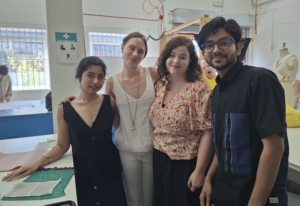
The collaborative energy at the Fashion Technology Academy (FTA) continues to grow as the 20 Open Style Lab participants enter their third week of their intensive programme, working together to create innovative adaptive fashion solutions that demonstrate how thoughtful design can transform lives.
While Week 2 was dedicated to developing practical garment construction skills, where the participants spent the day immersed using industrial sewing machines, Week 3 has seen ideas begin to take shape as each multidisciplinary team develops bespoke garments designed around the needs of real clients. Working in groups of four, the fellows are combining design, technical pattern cutting, garment construction and user-centred research to create clothing that is both functional and aspirational.
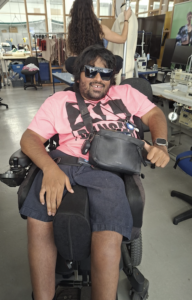
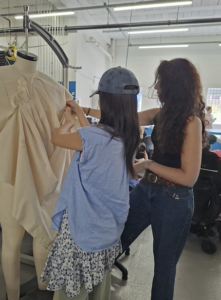
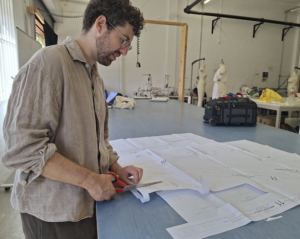
One team is designing a beautifully draped formal poncho for Jamil, a wheelchair user, creating an elegant garment suitable for weddings and special occasions while ensuring it is easy to wear and comfortable in a seated position. Another team is developing an innovative ballet costume for Susie, who is also a wheelchair user, incorporating discreet sensory panels capable of monitoring signs associated with epilepsy. Both projects perfectly illustrate how adaptive fashion can seamlessly combine style, dignity and functionality.
Hosting the Open Style Lab fellows has also provided an opportunity for the FTA to further demonstrate how an inclusive learning environment extends far beyond the curriculum. The teaching team has thoughtfully adapted both the classroom environment and its teaching methods to ensure every fellow can fully participate throughout the programme.
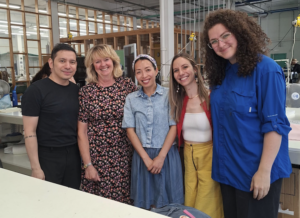
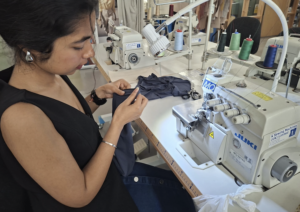
Workspaces have been reconfigured to provide greater circulation space for wheelchair users, enabling unrestricted movement around sewing stations and cutting tables. Bright overhead lighting has been softened to reduce eye strain and create a more comfortable learning environment for neurodiverse participants and those with sensory sensitivities. The Academy’s accessible industrial sewing machines and overlockers allow wheelchair users to work independently alongside their peers, ensuring every participant can develop the same professional manufacturing skills using industry-standard equipment.
Equally important has been the Academy’s people-first approach to teaching. Tutors have adapted their communication styles, carefully considering the language, pace and delivery of demonstrations to create a welcoming and supportive atmosphere for learners with a wide range of abilities and learning styles. The emphasis has been on collaboration rather than competition, encouraging every participant to contribute their expertise while learning from one another. Throughout the programme, the fellows have embraced a truly collaborative design process. Designers, makers, engineers, researchers and end users work side by side, sharing ideas and solving challenges collectively.
Over the past three weeks, each team has progressed through every stage of the product development journey, from concept generation and user research to design development, pattern cutting, sampling and garment construction. The studio has become a hive of creativity, with individuals continually testing ideas, refining details and supporting one another throughout the process.
This collaborative approach mirrors the ethos of the FTA, where technical excellence and inclusive education go hand in hand. By adapting teaching methods, creating accessible workspaces and fostering an environment where every learner feels valued, the Academy continues to demonstrate that inclusive education not only removes barriers but also inspires innovation.
More on the Open Style Lab X FTA Saturday programme next week.