
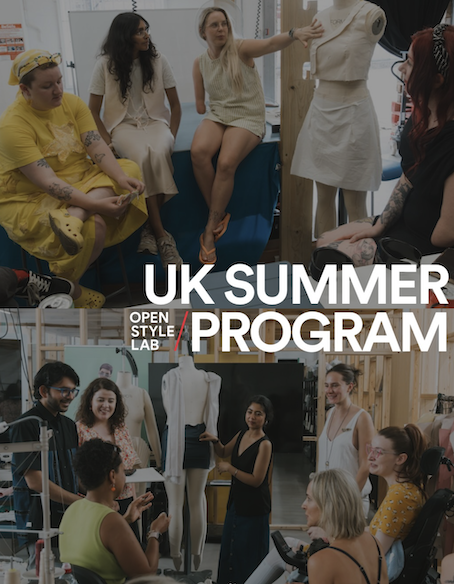
Over the summer, the Fashion Technology Academy (FTA) in Haringey welcomed participants from Open Style Lab’s 2026 Design Impact Fellowship for an intensive 10-week programme exploring how fashion can become more inclusive, accessible and responsive to the needs of people of all abilities.
Award-winning non-profit Open Style Lab (OSL) returned to London from June to September 2026 for this year’s fellowship, bringing together a diverse, transdisciplinary group of disabled and non-disabled designers, engineers, visual storytellers and occupational therapists. Working under the theme ‘Dress Codes’, the programme examined the explicit and implicit rules that influence how we dress, how we are perceived, and how comfortably and confidently we are able to participate in professional and social spaces.
For FTA, the collaboration provided an opportunity to support an ambitious programme of research, design and making, while demonstrating the importance of accessible, hands-on education within the fashion industry.
Rethinking the rules of dress
What we wear to work, formal occasions and important events can influence how we are perceived and how we feel about ourselves. Yet conventional approaches to formalwear and workwear do not always consider the diverse ways people move, sit, communicate and experience clothing.
The 2026 fellowship set out to challenge these assumptions, using disability-led research and co-design to explore new approaches to formal and professional clothing.
This focus is particularly relevant in the context of employment. In the UK, only around 53% of disabled people of working age are employed, compared with more than 82% of non-disabled people. Disabled people are also more than twice as likely to be unemployed as their non-disabled peers.
By questioning established ideas about what professional clothing should look and feel like, the programme explored how thoughtful garment design could contribute to greater confidence, comfort and inclusion.
Ten weeks of collaborative learning at the FTA
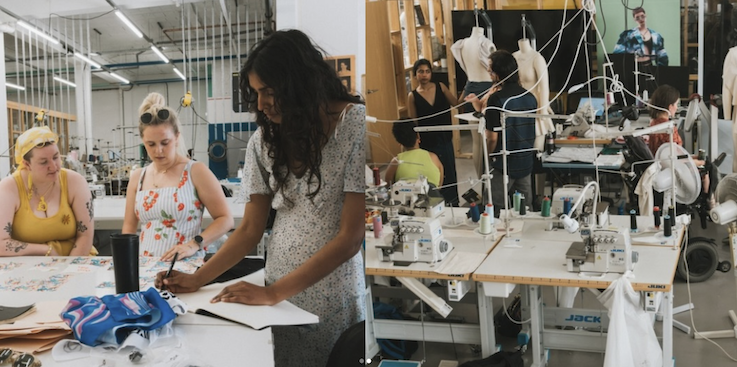
Throughout the 10-week programme, participants attended the Fashion Technology Academy every Saturday, using the facilities and expertise at the Haringey-based Academy to research, develop and test their ideas.
The programme was highly practical. Participants explored garment construction, pattern cutting and sampling, while making use of FTA’s industry-standard industrial sewing machines and overlockers.
An important part of the process was testing designs on the people they were being developed for. Participants worked with one another as mannequins, enabling teams to assess how garments fitted and functioned in different positions and circumstances. This hands-on approach allowed ideas to be continually refined, with practical considerations informing the design process from the earliest stages.
From the initial research and concept development through to pattern cutting, sampling and garment construction, the fellows experienced the different stages involved in taking an idea towards a finished garment.
Working in multidisciplinary groups of four, participants brought different areas of expertise to the studio. Designers, makers, engineers, researchers and people with lived experience worked alongside one another, combining technical knowledge with user-centred insight.
From ideas to adaptive fashion
As the programme progressed, the teams began developing bespoke garments responding to the needs of individual clients.
One team created a formal poncho for Jamil, a wheelchair user. Designed for weddings and other special occasions, the garment explored how an elegant, sophisticated silhouette could be combined with comfort and ease of wear while seated.
Another team developed an innovative ballet costume for Susie, who is also a wheelchair user. The design incorporated discreet sensory panels capable of monitoring signs associated with epilepsy, demonstrating how wearable technology could be considered alongside aesthetics, movement and individual needs.
These projects illustrate the central principle behind the fellowship: adaptive fashion does not have to mean compromising on style. Instead, inclusive design can open up new creative possibilities, combining functionality, technology and personal expression.
Creating an inclusive learning environment
Hosting the fellowship also gave the FTA an opportunity to put its own inclusive approach into practice.
The Academy’s teaching team adapted the classroom environment and teaching methods to support participants with different abilities and learning styles. Workspaces were configured to provide greater circulation space around sewing stations and cutting tables, helping wheelchair users move freely and work alongside their peers.
The Academy’s accessible industrial sewing machines and overlockers also enabled participants to develop professional manufacturing skills independently, using the same type of equipment found within the wider fashion industry.
Alongside physical adaptations, tutors considered how demonstrations and instructions were delivered, adapting communication, pace and language where appropriate. The aim was to create an environment in which every participant could contribute their knowledge and experience while developing new skills.
This people-first approach reflects the wider ethos of the FTA: that technical excellence and inclusive education should work hand in hand.
Celebrating the final designs
The final session at the FTA culminated in a photoshoot, providing an opportunity to capture the garments and showcase the outcomes of the teams’ work.
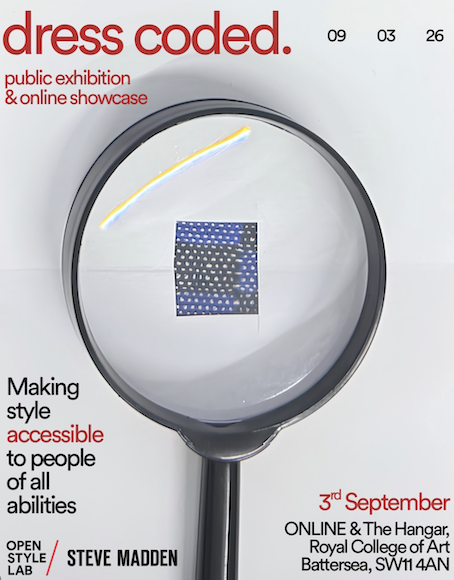
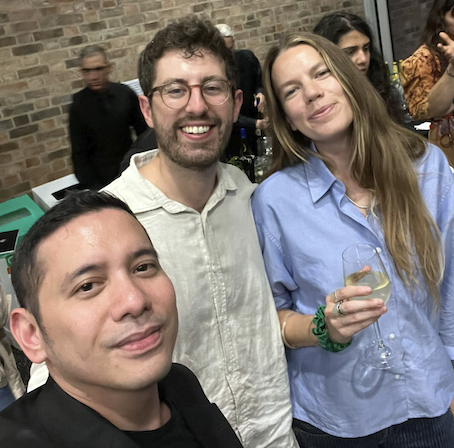
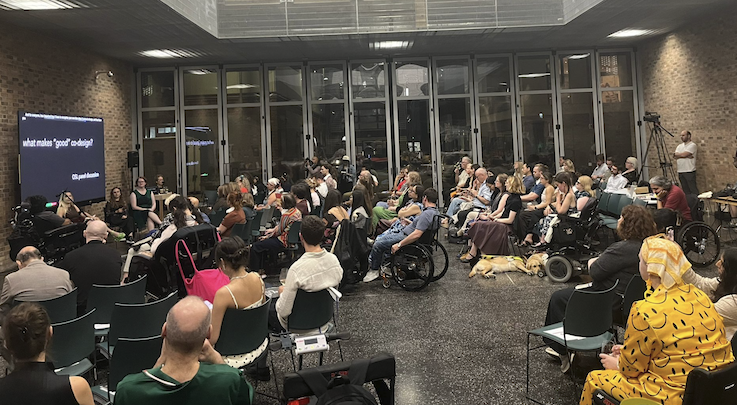
The fellowship then came together for the Dress Coded public exhibition at the Royal College of Art on 3rd September, where the work developed during the programme was presented to a wider audience. FTA tutor John Herrera attended the exhibition, representing the FTA and celebrating the achievements of the fellows. John played a vital role in supporting the sessions throughout the programme and received high praise for his contributions and guidance.
Lan Leeder, Head of Education at the FTA said: “Well done to all 20 fellows for their creativity and dedication over the past weeks. The group produced some fantastic outfits, demonstrating that adaptive clothing can be both fashionable and practical for everyone, regardless of any disabilities.”
Continuing the conversation around inclusive fashion
For the FTA, welcoming the OSL fellows to its Haringey facilities over the 10-week summer programme was an opportunity to support innovative work while reinforcing the Academy’s commitment to practical, inclusive fashion education.
From industrial sewing and pattern cutting to user-centred research, wearable technology and final garment presentation, the programme demonstrated that inclusive design is not an additional consideration at the end of the design process. It can – and should – be part of the process from the very beginning.
As the fashion industry continues to explore more inclusive approaches to design and manufacturing, collaborations such as this offer an important reminder: when clothing is designed with people, rather than simply for them, the possibilities are much greater.