
On 5th March 2026, tutors and team members from Fashion-Enter Ltd and the Fashion Technology Academy across the Haringey, Islington and Leicester campuses took part in an important online safeguarding session led by Prevent Education Officer, Tishya Desai.
The session focused on the UK’s Prevent duty, which forms part of the national counter-terrorism strategy known as CONTEST (UK counter-terrorism strategy). Prevent aims to safeguard individuals who may be vulnerable to radicalisation and to support early intervention before risks escalate.
For organisations working with learners, apprentices and employees, such training is an essential part of maintaining safe and inclusive environments.
A Shared Responsibility for Safeguarding
At Fashion-Enter Ltd and the Fashion Technology Academy, the welfare of students, apprentices and staff is a central priority. With hundreds of learners engaging in education and skills training each year, the organisation recognises its moral and professional responsibility to remain vigilant and informed about safeguarding risks.
Prevent duty training is a mandatory programme for frontline staff in sectors such as education, healthcare and local authorities. It helps professionals recognise early warning signs of vulnerability and understand how to respond appropriately.
Importantly, Prevent sits alongside other well-established safeguarding duties. These include protecting individuals from risks such as substance abuse, gang involvement, exploitation, or abuse, ensuring that support is available for those who may need it.

Objectives of the Training Session
The session on 5th March provided practical insight into the purpose and operation of Prevent. Key learning objectives included:
- Understanding what Prevent aims to achieve
- Considering who may be vulnerable to radicalisation or extremist influence
- Recognising early indicators that someone might need support
- Knowing what types of help and referral pathways are available
The training emphasised that Prevent is a supportive and safeguarding-focused programme, rather than a punitive one. It is designed to identify concerns early and connect individuals with appropriate help.
Understanding Current Trends
During the session, participants also explored broader trends shaping the safeguarding landscape across the UK.
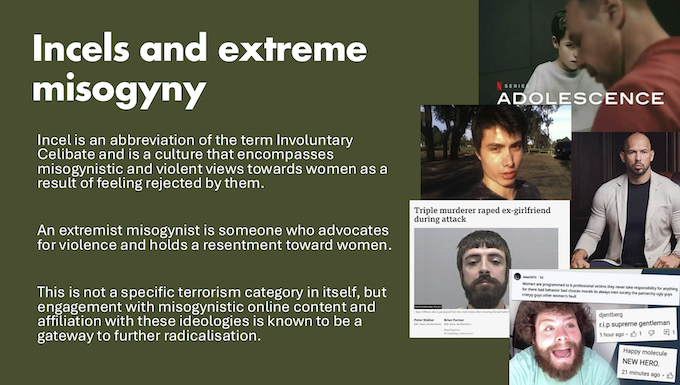
One of the most concerning developments is the growing influence of online spaces in radicalisation. Digital platforms and encrypted networks can allow harmful narratives, misinformation and extremist content to circulate more easily, often targeting younger audiences.
Recent data presented during the training highlights several key developments:
- A significant increase in Prevent referrals, with 8,778 referrals recorded between March 2024 and March 2025, the highest since records began in 2015.
- A rise in cases involving young people, with investigations into individuals under 18 reportedly increasing substantially in recent years.
- Radicalisation increasingly taking place online, through platforms and forums that foster closed communities and reinforce extreme views.
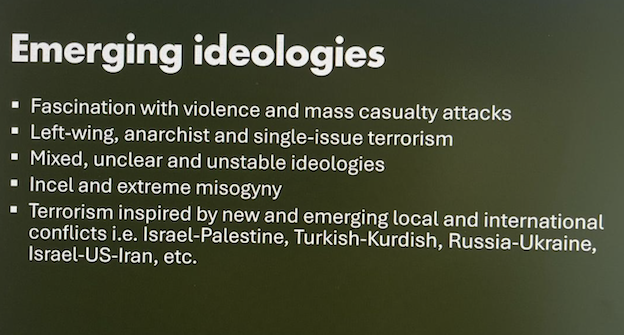
- Growing concern around a mix of ideologies, rather than individuals following a single organised extremist group.
The training also acknowledged that global events and geopolitical tensions that currently dominate the news can influence narratives online and shape public discourse, sometimes being exploited by groups seeking to promote division or hostility.
Recognising Warning Signs
A key focus of the training was helping staff recognise behaviours that may indicate someone is becoming vulnerable to extremist narratives.
Potential warning signs may include:
- Increasing aggression or intolerance toward others
- “Us versus them” language that promotes division
- Language that glorifies violence or harm
- Withdrawal, isolation or significant changes in behaviour
- Unwillingness to engage with new ideas or perspectives
- Expression of extreme or prejudicial views
- Accessing or sharing extremist material online
- Unquestioning belief in conspiracy theories
Staff were reminded that a single indicator does not necessarily mean someone is being radicalised. Instead, the emphasis is on observing patterns, maintaining open dialogue, and seeking advice when concerns arise.
A Practical Safeguarding Approach: Notice, Check, Share
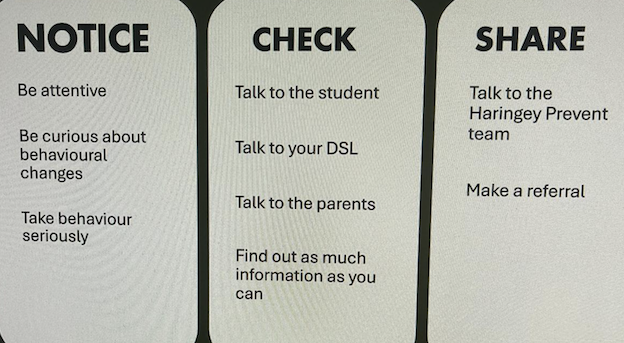
Prevent training encourages a simple but effective approach:
Notice – Be aware of behavioural changes or concerning signs.
Check – Seek guidance from safeguarding leads or appropriate channels.
Share – Report concerns so that support can be offered where needed.
This process ensures that concerns are handled responsibly and collaboratively, rather than left to individuals to manage alone.
Early Support Through Prevent
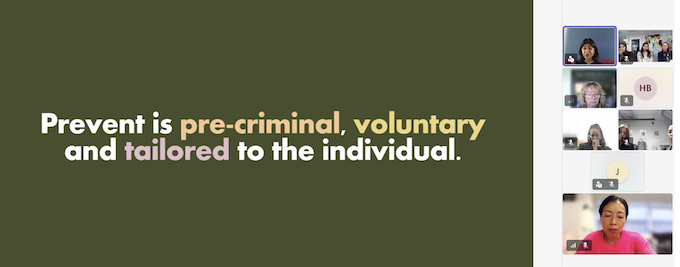
A crucial point emphasised throughout the session is that Prevent is pre-criminal, voluntary and tailored to the individual.
If someone is identified as vulnerable, they may be referred to the Channel programme, which offers mentoring, education support, mental health assistance or other interventions designed to help individuals move away from harmful influences.
The aim is not punishment, but support and safeguarding.
Building Resilience in Education and Training
For organisations like Fashion-Enter Ltd and the Fashion Technology Academy, regular Prevent training plays an important role in maintaining safe, inclusive learning environments.
By staying informed about emerging risks and strengthening awareness among staff, the organisation can help ensure that learners and employees are supported not only academically and professionally, but also in terms of their wellbeing and resilience.
Promoting critical thinking, digital awareness and respectful dialogue remains a key part of this effort.
Commitment to Ongoing Learning
Safeguarding is an evolving area, particularly as technology, online communities and global events continue to influence the way information spreads.
By engaging with Prevent training and working closely with partners such as Haringey Council, Fashion-Enter Ltd and the Fashion Technology Academy reaffirm their commitment to protecting their communities and supporting those who may be vulnerable.
Maintaining awareness, encouraging open conversations and ensuring early support remains available are essential steps in building safe and resilient educational environments for everyone.